Rodent exclusion addresses the architectural vulnerabilities that allow Norway rats, roof rats, and house mice to bypass perimeter chemical applications. In historic neighborhoods like Dilworth and Plaza Midwood,…
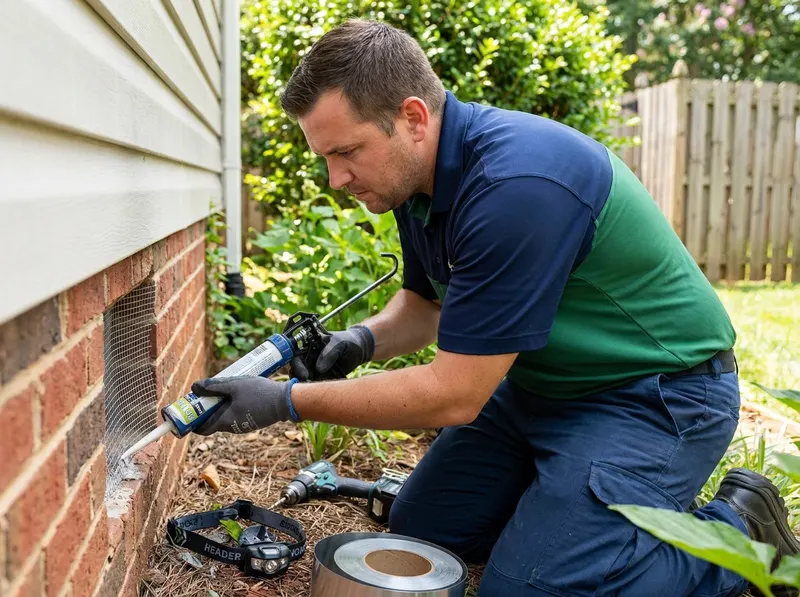
Rodent exclusion addresses the architectural vulnerabilities that allow Norway rats, roof rats, and house mice to bypass perimeter chemical applications. In historic neighborhoods like Dilworth and Plaza Midwood, brick-pier foundations and original stone underpinnings settle over decades, creating ground-level gaps exceeding 1/4 inch. Mice require an opening of only 6 millimeters (the width of a pencil) to access floor joists, while mature rats exploit 12-millimeter openings. Chemical rodenticides and snap traps thin an active interior population, but trapping without physical exclusion guarantees re-infestation as external scent markers draw nearby rodents from mature tree canopies. Structural exclusion physically denies entry, making it the primary permanent solution for long-term domestic security.
The mature hardwood tree canopies across Myers Park provide roof rats direct bridge routes to fascia boards, dormer returns, and attic soffits. Roofline exclusion secures these elevated junctions with rigid metal flashing and 19-gauge wire fabric, withstanding gnawing pressure that defeats standard expanding foam. In lower crawl spaces, standard nylon screen vents deteriorate under high Mecklenburg County humidity and rainfall. Replacing compromised screens with galvanized steel assemblies prevents rodents from nesting against subfloor insulation and heating ductwork.
Homeowners choose between standalone interior trapping programs and full structural envelope exclusion based on property age and foundation type. Interior trapping addresses existing rodents within finished living areas but leaves structural breaches open, requiring repeated seasonal intervention. Full mechanical exclusion requires higher upfront material investment and methodical installation time, but it terminates recurring entry points. Exact quotes are established through physical inspection rather than remote estimates, with project costs starting at the $250 minimum charge for foundational utility penetrations and scaling according to exterior linear footage and architectural access height.
Every job gets a firm, written price after a free on-site visit.
Tell us about your residential rodent proofing and structural exclusion job in Charlotte and we'll send a clear, written quote, usually the same day.
 ClearZone Pest Control