Securing structural perimeters against humid Piedmont climate pressure demands calculated, species-specific pest control services in Charlotte. From German cockroach aggregations inside historic wall cavities to subterranean termite colonies traversing high clay tables, effective intervention requires precise environmental barriers.
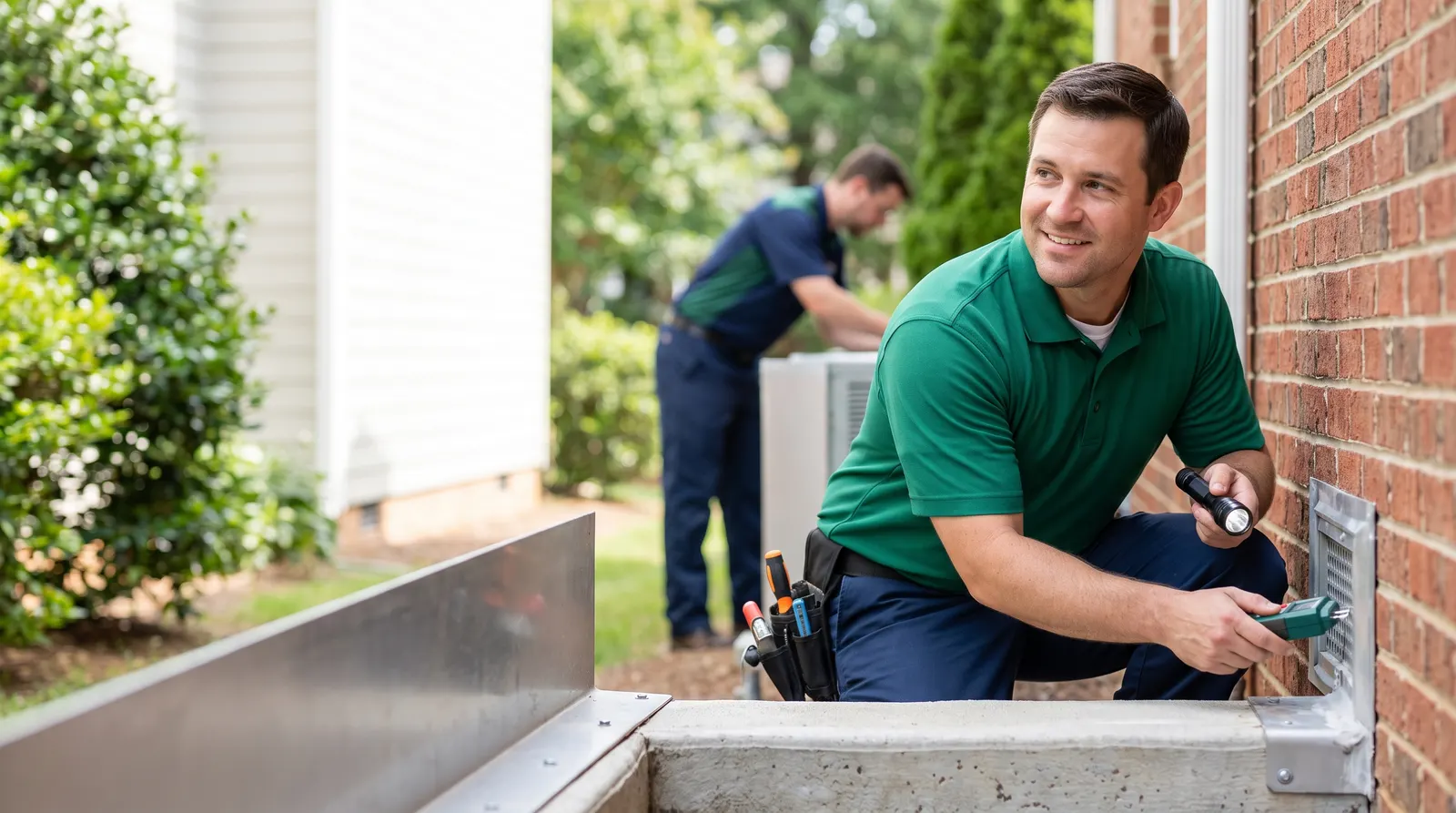
A professional pest control services company in Charlotte is a specialized structural defense provider that identifies, eliminates, and blocks invasive insects, rodents, and biological vectors from residential and commercial structures throughout Mecklenburg County.
Every service reflects the same meticulous attention to detail, whether it's a single job or a larger pest control services project across Charlotte.
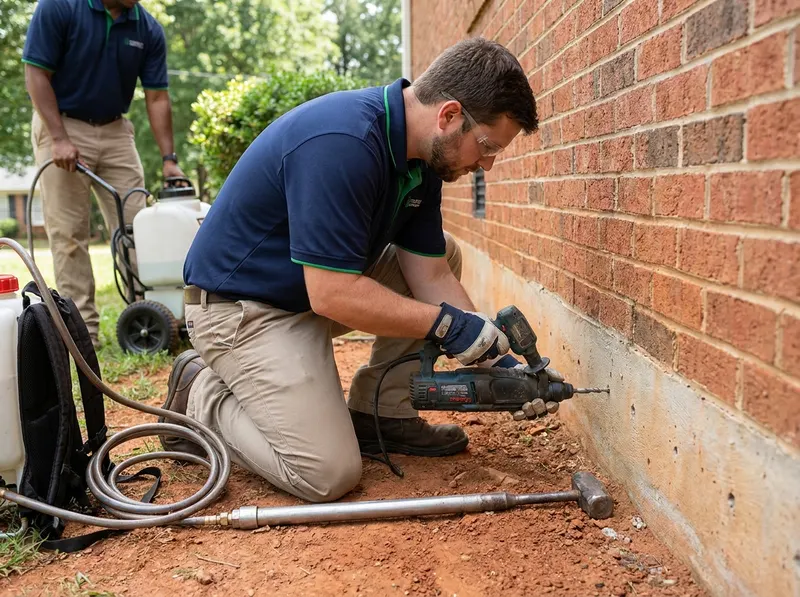
Liquid non-repellent termiticide trenching along monolithic slabs and foundation curtain walls creates continuous chemical boundaries. Technicians treat soil down to the top of structural footings at a rate of 4 gallons per 10 linear feet per foot of depth, eliminating subterranean worker termites traversing humid Mecklenburg saprolite clay before cellulose damage reaches subfloor framing, sill plates, or support piers. Comprehensive inspections evaluate perimeter expansion joints, plumbing penetrations, and hollow-block masonry cores to detect hidden mud tubes and structural timber decay early.
Get a quote →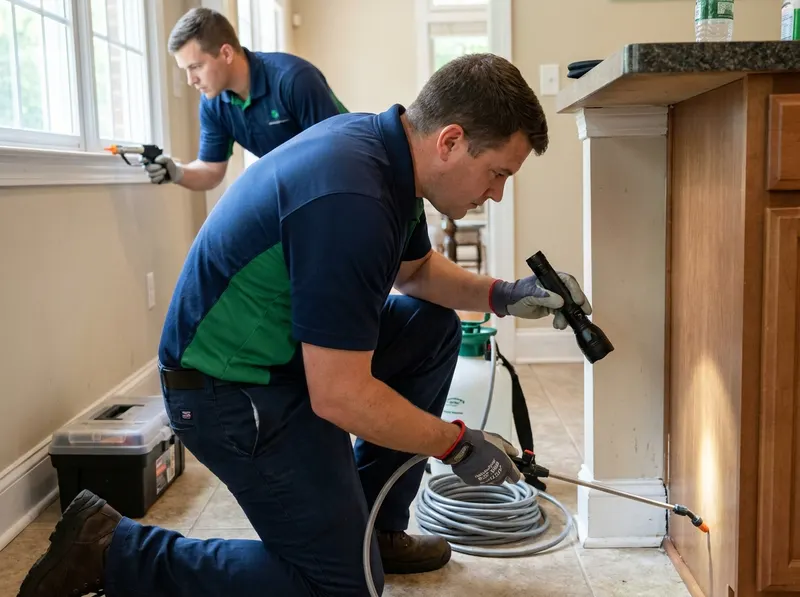
Directed insect growth regulators and precision micro-gel baits clear aggregations of American, German, and Oriental cockroaches. Applications penetrate deep behind baseboards, kitchen pipe runs, cabinet hinge plates, and exterior mulch perimeters to extinguish localized reproduction cycles without broadcast interior aerosol drift. Clean application practices isolate bait placements from human contact surfaces, pet areas, and food preparation counters while effectively collapsing juvenile nymph populations within 14 days.
Get a quote →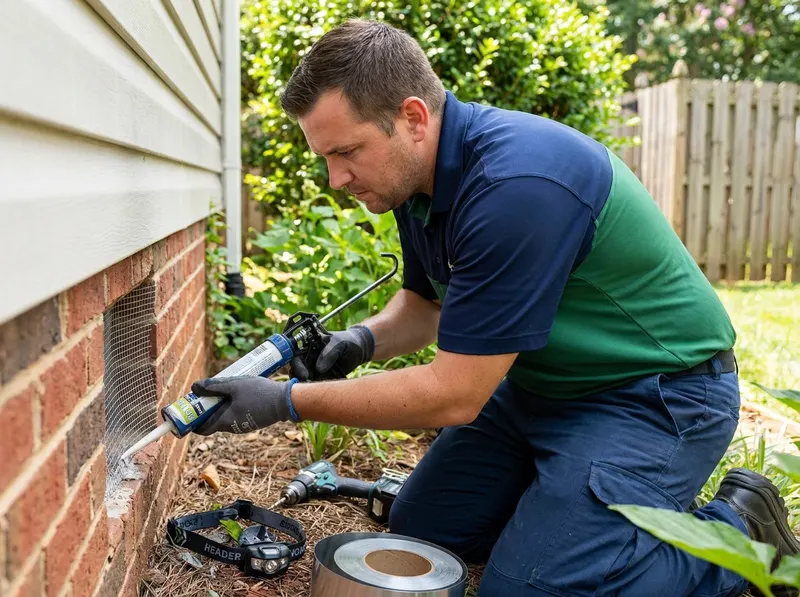
Comprehensive mechanical exclusion seals roof eaves, ridge vents, crawlspace access covers, and foundation penetrations using galvanized steel mesh, copper mesh, and concrete mortar. Interior snap-trap arrays placed along identified thermal runways capture active roof rats or Norway rats without deploying secondary poison hazards inside living quarters or ceiling plenums. Technicians systematically map gnaw marks, rub lines, and droppings to pinpoint primary entry portals as small as one-quarter inch.
Get a quote →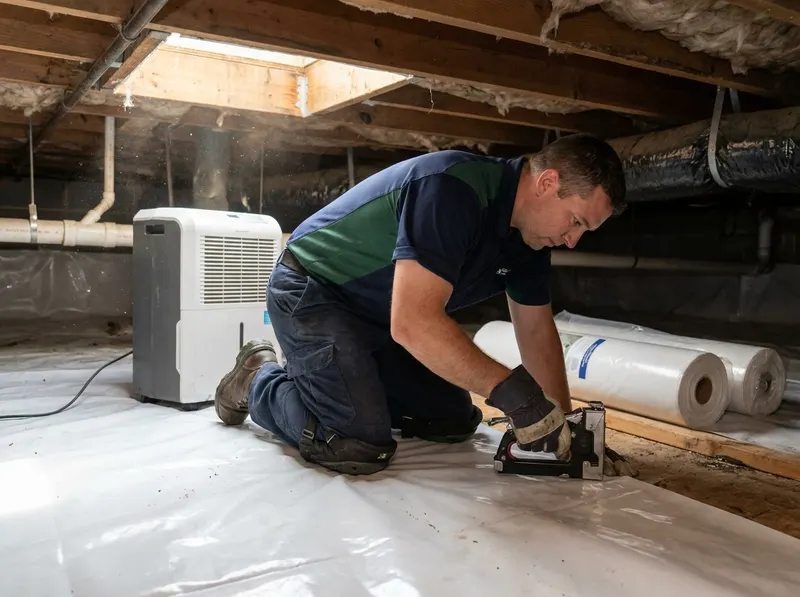
High relative humidity in central North Carolina elevates subfloor moisture above 20 percent, triggering structural fungal growth, soft rot, and subterranean insect nesting. Installation of heavy-duty 12-mil to 20-mil reinforced ground vapor barriers, airtight crawlspace vent seal assemblies, foundation pier wrapping, and continuous energy-efficient dehumidifiers permanently eliminates sub-structure harborages and damp soil evaporation under living areas.
Get a quote →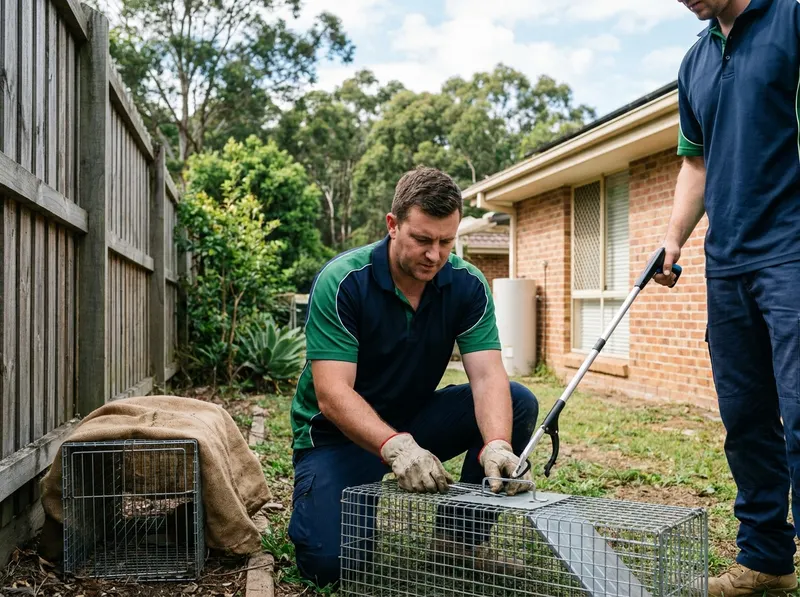
Squirrels, raccoons, bats, and opossums nesting in structural attics or chimneys are safely captured using species-specific live traps and positive-catch exclusion systems. Technicians repair exterior soffit penetrations, clean biological debris and contaminated insulation, and install heavy-duty 16-gauge hardware cloth barriers across gable louvers to prevent return nesting cycles across varied tree canopy corridors.
Get a quote →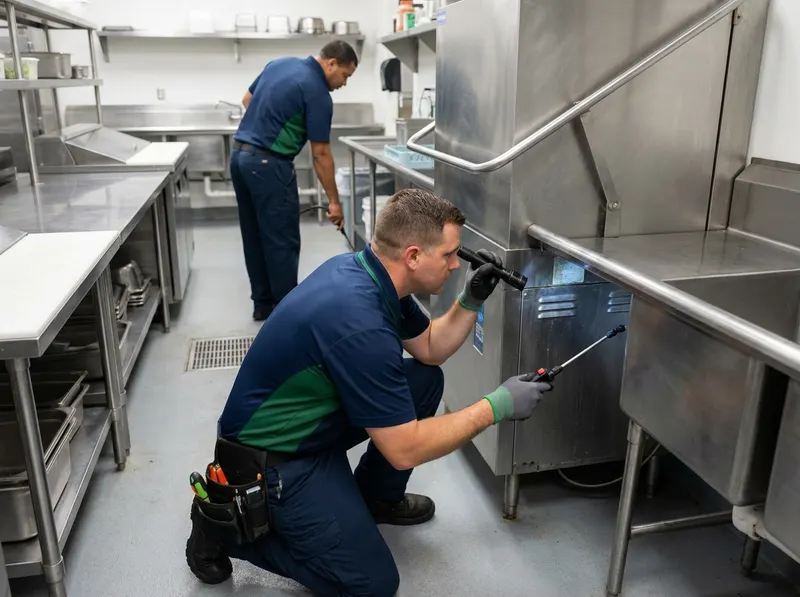
Audited food service pest mitigation engineered to comply with Mecklenburg County Health Department sanitation standards. Regulated strategies deploy discreet non-chemical insect light traps, electronic monitoring stations, targeted drain bio-gel foaming for phorid and fruit flies, and structural perimeter defense along exterior dumpster pads and grease interception enclosures to eliminate regulatory risk.
Get a quote →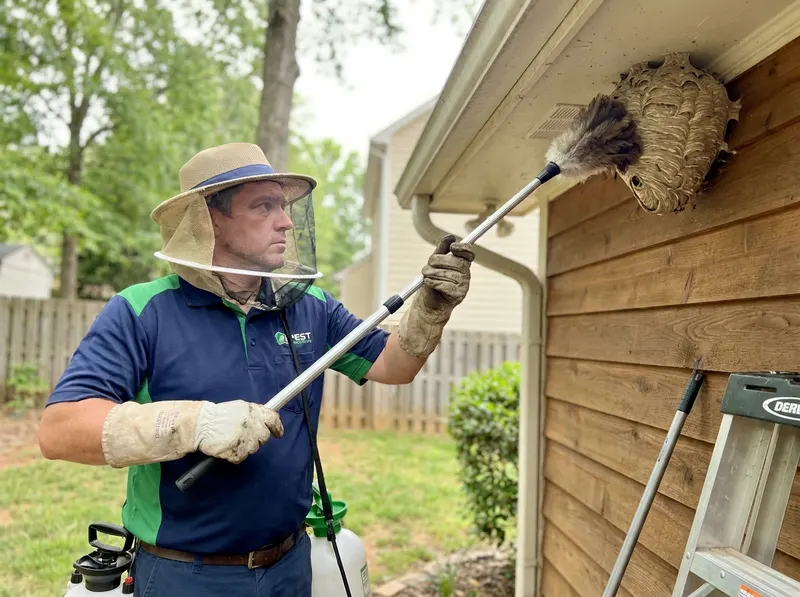
Safe elimination of bald-faced hornet, yellowjacket, paper wasp, and carpenter bee colonies sheltering beneath fascia boards, window dormers, and deck ledges. High-reach equipment delivers targeted, residual insecticidal agents directly into nest envelopes without contaminating outdoor recreation areas, followed by complete physical nest removal and residual preventative treating to stop recurring spring colonization.
Get a quote →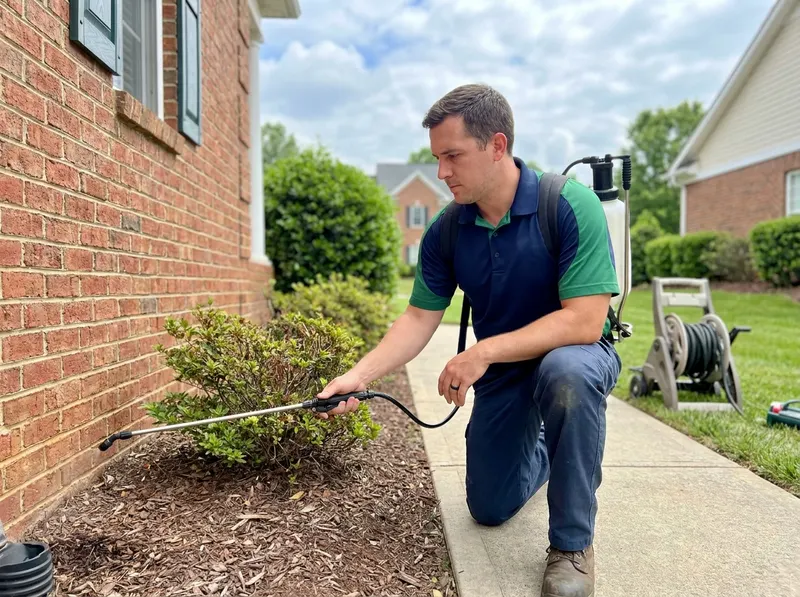
Scheduled ground and foundation applications establish a six-foot exterior chemical buffer around crawlspace vents, brick ledges, expansion joints, and door thresholds. Microencapsulated formulations resist breakdown from Carolina UV exposure and heavy summer rains, halting seasonal millipede, Argentine ant, fire ant, and spider migrations before pests penetrate exterior sheathing.
Get a quote →You get a firm, itemized quote for your pest control services before any work begins, no surprises, no pressure.
Careful prep, tidy work, and a full cleanup when we are done. We treat your home and belongings like our own.
The same trusted, background-checked team from the first call to the final check.
Selecting structural pest and environmental defense requires balancing immediate knock-down needs against long-term envelope management. If a property displays active insect sightings within interior baseboards or plumbing stacks, an initial targeted perimeter and void treatment resolves the immediate population surge, requiring 48 to 72 hours for complete bait and contact circulation. If structural dampness exceeds 18 percent wood moisture content beneath a subfloor, localized pest eradication alone will fail, making comprehensive crawlspace moisture control and 12-mil vapor barrier encapsulation the necessary choice.
The trade-off centers on project scope and up-front expenditure versus recurring vulnerability: standalone topical chemical applications address immediate active vectors at lower initial capital, whereas foundational mechanical sealing, crawlspace encapsulation, and exterior exclusion assemblies demand higher initial labor but permanently deprive subterranean pests of harborage, soil moisture, and entry access across Charlotte microclimates. When dealing with wood-destroying organisms like subterranean termites, surface spot-spraying yields zero colony mortality; systemic trenching using non-repellent termiticides down to the footings or localized borate wood infusions are required to disrupt the subterranean lifecycle entirely. Conversely, exterior perimeter insect flushes manage perimeter invader spikes like American cockroaches, smoky brown roaches, and field crickets during hot, humid summers, but structural penetrations must still be caulked and sealed with copper mesh or hydraulic cement to prevent winter entry.
For rodents such as roof rats nesting in mature attic canopies, poison bait stations outside cannot substitute for rigid structural exclusion along rooflines, dormers, and crawlspace vents; trapping within a sealed envelope remains the only permanent remediation that prevents secondary rodent carcass decomposition within interior drywall voids.
Every project gets a firm, written price after a free on-site visit. Ranges below for orientation.
Tell us about your pest control services job and we'll send a clear, written quote, usually the same day. Or just call and talk to a real Charlotte pro.
(980) 470-3059
Charlotte sits directly over humid, iron-rich Cecil soil profiles that retain excessive groundwater along low-lying floodplains near Little Sugar Creek, Briar Creek, and the Irwin Creek greenway network. These environmental conditions create chronic moisture pressure beneath historic raised brick foundations in neighborhoods like Dilworth, Elizabeth, and Myers Park, where damp crawlspace soil regularly exceeds 19 percent wood moisture content and fosters subterranean termite swarms each spring. Concurrently, dense canopy corridors of mature willow oaks, loblolly pines, and sweetgums throughout Plaza Midwood and Foxcroft act as natural elevated highways for southern flying squirrels and roof rats, leading them straight onto roof dormers, soffit returns, and gutter lines. Rapid multi-family development along South End and NoDa shifts underground Norway rat harborage and drives displaced crawling pests directly into adjacent single-family properties. Addressing these regional pressures requires adapting chemical barrier formulations to Piedmont clay leaching rates, installing heavy mechanical exclusion assemblies along older foundation mortar lines, and pairing exterior insect treatments with sub-structure moisture mitigation across every local microclimate.
Free estimates for Charlotte & the surrounding area.
 ClearZone Pest Control