Humane wildlife trapping operates on physical exclusion and eviction mechanics rather than indiscriminate toxicant placement. In mature canopy neighborhoods like Myers Park and Dilworth, towering willow oaks provide…
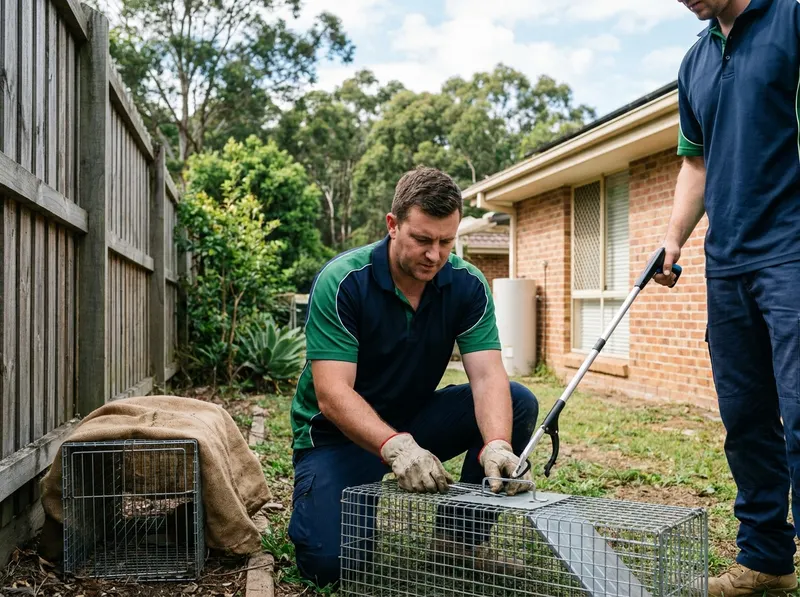
Humane wildlife trapping operates on physical exclusion and eviction mechanics rather than indiscriminate toxicant placement. In mature canopy neighborhoods like Myers Park and Dilworth, towering willow oaks provide Eastern gray squirrels and raccoons immediate access to fascia boards, dormer roof intersections, and chimney flues. Standard baiting programs fail against structural wildlife; chemical toxicants carry the distinct risk of secondary poisoning to domestic pets and frequently result in animals dying inside inaccessible exterior wall cavities, generating severe biological odors and secondary insect infestations. A targeted intervention relies on rigid 16-gauge galvanized steel mesh barriers, spring-loaded one-way door escapes, and species-rated live traps checked in accordance with North Carolina state statutes.
Structural entry dynamics differ markedly across Charlotte architectural styles. Historic bungalows in Plaza Midwood and Fourth Ward often feature open stone pier foundations and unlatched soffit returns, allowing opossums and skunks direct crawlspace access adjacent to HVAC ducting. Meanwhile, colonial builds across South Charlotte frequently face raccoon maternal denning inside unmitigated attic insulation between March and June. The mechanical trade-off in nuisance wildlife management balances live exclusion speed against building envelope durability: simple one-way doors empty an attic quickly, yet failing to reinforce softened wood fascia with heavy-gauge flashing invites secondary territorial breaches along the exact same roofline within 30 days.
Wildlife relocation and handling in Mecklenburg County is strictly governed by the North Carolina Wildlife Resources Commission (NCWRC). Technicians utilize Wildlife Damage Control Agent (WDCA) standard methods, ensuring humane treatment during trap cycles and preventing the separation of dependent litters. Every perimeter closure uses heavy-duty materials resilient against gnawing teeth and seasonal summer humidity: 1/4-inch hardware cloth, steel chimney caps, and elastomeric structural sealants. Following physical animal extraction, affected attic insulation is evaluated for biological urine saturation and guano deposits, enabling targeted remediation without pushing homeowners into open-ended monthly service contracts.
Every job gets a firm, written price after a free on-site visit.
Tell us about your humane nuisance wildlife trapping and removal job in Charlotte and we'll send a clear, written quote, usually the same day.
 ClearZone Pest Control